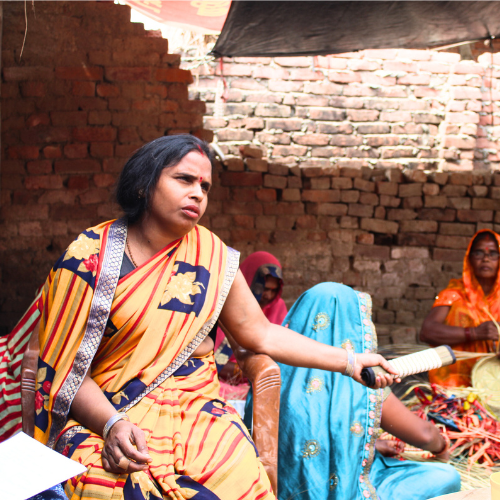
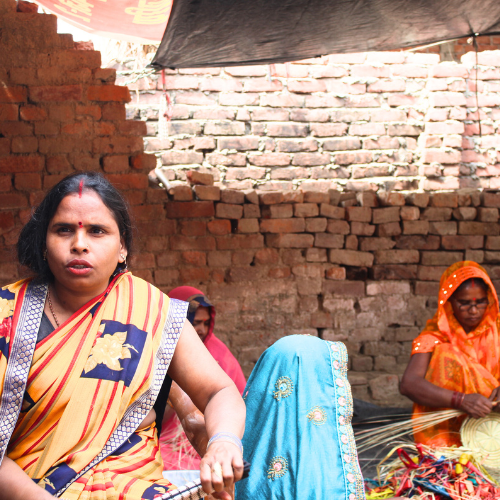
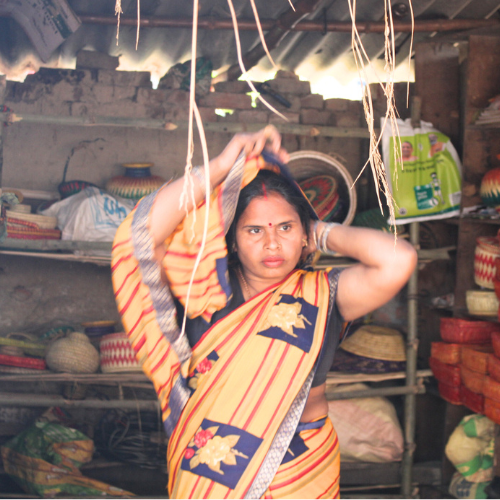
Kiran hails from the village of Behradabar, but her roots lie in her maternal village, Bagha Cheri, in Bhaluani Block. She recalls, “I was pursuing my studies when my parents arranged my marriage in 2001, at the age of 17. Two years later, in 2003, my daughter was born, and my family continued to grow. I now have seven children, four sons and three daughters. The weight of providing for them and ensuring their education consumed me, especially since my husband, Radha Krishna Sharma, a carpenter by profession, didn’t take his responsibilities seriously. For years, I asked him for financial support, but he always evaded the conversation. Fourteen years slipped away like this.”
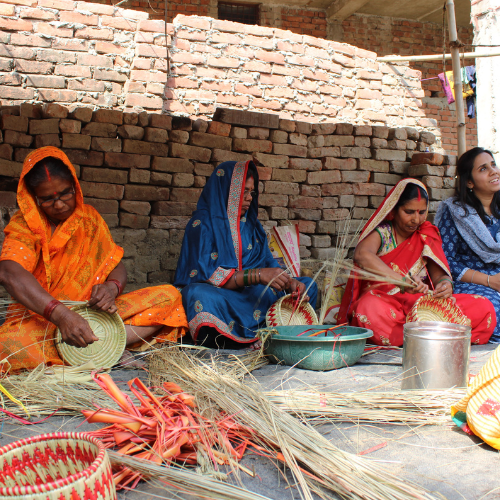
Despite her hardships, Kiran’s biggest concern was the future of her daughters and the cost of their eventual marriages. It was during this period of worry that a long-forgotten skill came to her mind – the art of munj weaving, something she had learned from her mother and sisters. She went to the riverbank, gathered the raw material, and started crafting baskets. But the demand for her products was nonexistent, leaving her disheartened. The biggest obstacle she faced was capital. Without resources, how could she scale her work?
In 2017, Kiran’s life took a significant turn. She recalls meeting Suvarna, the project head, who introduced her to the team – Manoj and Preeti. They were deeply impressed by Kiran’s work and helped connect her with Tech Shakti, a digital empowerment initiative. They trained her in the finer details of digital platforms, enabling her to explore new designs on Google and YouTube.
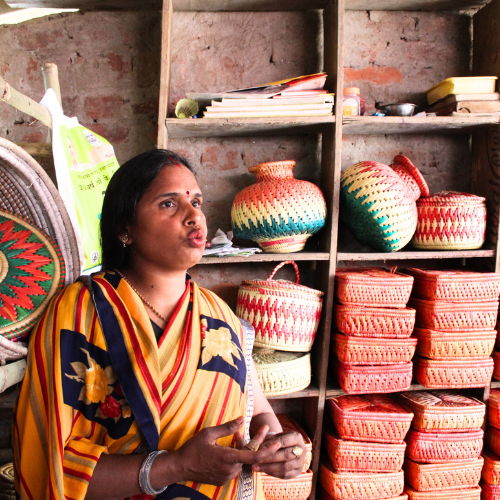
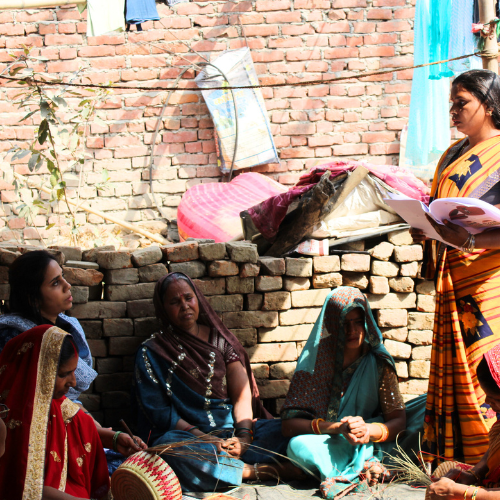
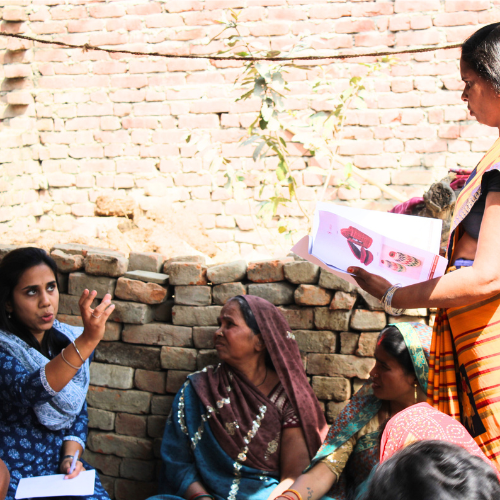
With guidance from Jagriti, Kiran began her new journey, starting small with just two women from her village. Together, they crafted various products like bread boxes, wall plates, bags, bird nests, laundry boxes, fruit baskets, book covers, coasters, and gift boxes. As Jagriti’s mentorship continued, her work expanded, and so did her team. Today, she leads a group of 15 women, earning between ₹15,000 and ₹20,000 a month. The other women earn around ₹4,000 to ₹5,000 per month.
Her products now reach metropolitan cities like Delhi and Mumbai, and even the UK, through postal, courier, and bus services. Payments are seamlessly transferred online to her bank account. “I had lost hope,” Kiran admits. “I thought nobody in today’s world would appreciate handmade munj crafts. But Jagriti awakened the skill within me, playing the role of Jambavan in my life, rekindling my spirit and showing me that I could do it.”
“Never lose hope,” Kiran says with conviction. “No matter how difficult the circumstances, one should never give up. If you have the passion to achieve something, helping hands will find their way to you. Keep your courage intact, and success will one day be yours.”
Kiran often reflects on a memory from her childhood—when she would watch her grandmother weave munj baskets. As a young girl, she too tried her hand at it, only to have her father snatch the basket away and throw it into the pond, telling her to focus on her studies instead. “The time you waste weaving baskets,” he’d say, “would be better spent on your education. It will help you more in the future.” Little did he know that very skill would one day shine not just in India, but across the globe.